
Back To Nuts And Bolts: Getting Reliability Right On Today's And Tomorrow's Vehicles
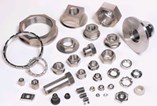
With advanced vehicles requiring ever lighter, stronger, higher speed, higher RPM, and higher temperature designs, getting the nuts, bolts, taps, and fasteners right is key to reliability, profitability and customer satisfaction
Times have changed, and the way automotive OEMs deal with the nuts, bolts, taps, fasteners, and ultimately the reliability of their vehicles is changing too. Today, car and truck buyers can't access most nuts and bolts as they've done in the past because they're typically sealed within complex electronic systems. Vehicles are so complicated that consumers simply expect them to work and won't accept those that don't; as such, 100,000-mile warranties are becoming the norm.
Proactive manufacturers understand they're in the transportation business, meaning their vehicles must operate nearly flawlessly. For just as car and truck owners can't afford to have their vehicles in repair shops when there's work to do, manufacturers can't afford to fix vehicles in the field, issue recalls, face potential liability, or suffer market share erosion.
From top end design down to the nuts and bolts holding the vehicle together, consumers now expect and demand trouble-free reliability.
It used to be that the last thing considered in designing a vehicle was how to hold it together. Most of the time they deferred to what had been done before, and today that's not enough. It's well documented that 40 to 60 percent of all warranty claims in the auto industry are due to fastener problems leading to components coming loose from vehicles.
The nuts and bolts of vehicle design can also determine the cost effectiveness of a component during its product life cycle. Consumers can no longer be expected to get out the toolbox, lift the hood, and regularly tighten loose screws and bolts as part of regular maintenance.
The reliability challenge is tougher on OEMs today as advanced vehicles require ever lighter, stronger, higher speed, higher RPM, and higher temperature designs to meet market competition and consumer tastes. Much of this reliability challenge stems from screw thread design, which was standardized during WWII to promote compatibility and has remained virtually unchanged since then.
Under ideal conditions, standard male and female threads would fit together perfectly. In the real world, however, under the constraints of mass production and JIT delivery, this seldom happens.
While secondary locking devices have been developed in an attempt to address this shortfall, at best they simply prevent the threads from catastrophically coming apart. Because none actually holds the clamp load in the joint, they are susceptible to vibration, fatigue, or temperature-related joint failure.
Though engineers traditionally look to lock washers, prevailing torque fasteners, adhesives or other secondary locking devices, these may be inappropriate or have considerably higher total costs over the product lifecycle. For example, split washers, lock washers, and lock wires add extra weight and complexity to component design. This increases the chance that something may go wrong during assembly or maintenance and complicates inventory control. Other mechanical locking features, such as brackets, can also prove costly and tedious to use on components with multiple bolts. If not properly fastened during assembly, they can pose a quality assurance risk.
Crimping threads after screwing require extra steps and can prevent reusability. Similarly prevailing torque fasteners can damage threads and often prevent reusability while raising labor, maintenance, and quality inspection costs. Due to high resistance during assembly, they are prone to galling and require more effort to ratchet down using specialized tools.
Most locking adhesives, in turn, lose effectiveness as temperature rises. In high volume, their use typically requires a large capital expense to purchase and program robot applicators. And when re-application is necessary, cleaning the threads of affected components takes added time and labor before re-application is possible.
Securing bolts with single-use drypatch adhesive, activated when the bolts are tightened, can also add to assembly, maintenance, or warranty costs. This is because, once used, the bolts must be replaced for any necessary rebuilds or maintenance. Affected internal threads must also be cleaned before new bolts with drypatch adhesive can be applied, adding to time and labor costs.
At the heart of the matter is a basic design problem with the standard 60-degree thread form: the gap between the crest of the male and female threads can lead to vibration-induced thread loosening. Stress concentration and fatigue at the first few engaged threads is also a problem, along with an increased probability of shear, especially in soft metals, due to its tendency toward axial loading. Temperature extremes can also expand or contract surfaces and materials, potentially compromising joint integrity.
 To address these reliability concerns while reducing component weight and enabling re-usability, engineers have turned to the first thread innovation since WWII, the Spiralock locking fastener. This re-engineered thread form adds a unique 30-degree wedge ramp at the root of the thread which mates with standard 60-degree male thread fasteners.
The wedge ramp allows the bolt to spin freely relative to female threads until clamp load is applied. The crests of the standard male thread form are then drawn tightly against the wedge ramp, eliminating radial clearances and creating a continuous spiral line contact along the entire length of the thread engagement. This continuous line contact spreads the clamp force more evenly over all engaged threads, improving resistance to vibrational loosening, axial-torsional loading, joint fatigue, and temperature extremes.
The innovative locking fastener thus compensates for variations in manufacturing tolerance and process due to mass production with its locking thread actually inside the joint. This eliminates the need for secondary locking devices or procedures, and can significantly reduce costly warranty claims and potential liability. The locking fastener has been validated in published test studies at leading institutions including MIT, the Goddard Space Flight Center, Lawrence Livermore National Laboratory, and British Aerospace. It has been used in the automotive industry and thousands of applications to solve design challenges in a wide range of industries. Production changeovers to this fastener are typically quick and seamless, often requiring just an exchange of traditional nuts, wire inserts or simply drilling out and re-tapping existing parts stock that have unreliable standard tapped holes.
Several online tools can help engineers find the best locking fastener or tooling for the application. Among these are an online Tap Selection Tool; Torque Calculator; Drill and Hole Size Calculator; and Tap Troubleshooting Guide on the Technology page at www.spiralock.com. The Tap Troubleshooting Guide, for instance, can help walk engineers through an issue such as when a go-gage does not go, which can be a sign that a tap is wearing down or getting poor tool life. It can also help engineers spot when too much tension is being generated in the tapping process.
Though the company is celebrating its 80th anniversary this year, it's still innovating with the automotive industry in mind. Of interest to automotive engineers seeking the added strength and reduced weight of softer metals like magnesium or aluminum is a new type of wire thread insert the company is developing. The wire thread insert without tang, yet with thread locking in the joint itself, will provide threaded joints added strength, secure locking, and multiple reusability. This will be especially helpful for diesel and gas engine manufacturers using softer metals prone to fatigue or stripping.
Now that the auto industry has advanced to the point where most car and truck owners can no longer maintain their own vehicles due to sealed components and electronic complexity, the industry must get reliability right. Toward this back to nuts and bolts effort, innovative locking fastener designs such as the first re-engineered thread form since WWII can help engineers limit warranty claims and potential liability while boosting profitability and customer satisfaction.
For detailed test data, including comparative graphic loading characteristics or photoelastic analysis/load vector comparison animation, visit Spiralock at www.spiralock.com; email slinfo@spiralock.com; call (800) 521-2688; fax (248) 543-1403; or write to Spiralock at Madison Tech Center, PO Box 71629, Madison Heights, MI 48071.
SOURCE: Spiralock Corporation